
Most organizations don’t have a DesignOps problem. They have a “nobody decided to actually build it” problem. Here’s what that looks like, why it keeps happening, and how to fix it.
Every design organization I have ever walked into has had some version of the same conversation. Someone has already identified the problem. Usually a design manager, sometimes a director, occasionally a very tired senior designer. The team is reinventing wheels. Nobody can find the right component. Onboarding a new designer takes three weeks longer than it should. Research findings disappear into Confluence pages that nobody reads. The design system exists, but governance is a group chat thread. Decisions are being made by whoever talks loudest in the room.
And this all comes down to absent or immature DesignOps, and the conversation about it has been happening in design circles for a decade.
What nobody in that conversation usually says out loud is that identifying the problem is not the same as committing to fix it. And fixing it requires a kind of unglamorous, sustained infrastructure work that design organizations are not always wired to celebrate.
I have built DesignOps practices from scratch at three organizations (Logility, Paychex, and Deluxe) across enterprise SaaS, HR tech, and financial services. Each context was different. The org sizes were different. The executive appetite for design investment was different. What was the same every time was the resistance, the skepticism, and the specific flavor of chaos I was walking into.
This is not a framework post. Every org will need something slightly different, and anyone who tells you otherwise is selling you a template. What I can offer is what I have actually learned about what DesignOps is, why most attempts to build it fail, and what it takes to build a practice that holds.
What DesignOps Actually Is (And What It Is Not)
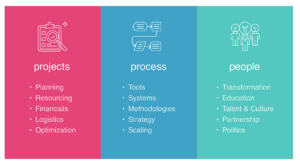
DesignOps is the operational infrastructure that lets design teams do their best work consistently, at scale, without burning out or reinventing the wheel every sprint.
That is a functional definition, and it is the right one. What it is not is a title, a tool stack, a Figma library, or a single person whose job it is to wrangle everyone else’s chaos. I have seen all four of those described as “our DesignOps solution.” None of them are.
DesignOps is a practice. It is a set of decisions your organization makes, deliberately and repeatedly, and with ongoing maintenance, about how design work gets done. How designers onboard. How components get built, reviewed, and released. How research gets synthesized and shared. How the design system evolves. How cross-functional handoffs happen. How quality gets defined and measured.
If those things are working well in your organization, you have DesignOps, whether you call it that or not. If they are not working well, you do not have a tooling problem or a staffing problem. You have a DesignOps problem.
The distinction matters because it changes what you go build. If you think DesignOps is a tool, you buy a tool. If you think it is a person, you hire a person. If you understand it is a practice, you build the systems, standards, and habits that make quality design work possible, regardless of which specific tools or people are in the room.
Why Most DesignOps Efforts Fail
I want to name three failure modes I have watched play out repeatedly, because understanding them is most of the work.
The first failure mode is building DesignOps before you have design. This sounds backward, but it happens more than you would think. An organization decides it needs DesignOps and immediately starts investing in tooling and process before it has enough design maturity to know what problems it is actually solving. You end up with beautiful governance for a design system nobody is using, or an elaborate component library that the engineers have never heard of. DesignOps has to follow design capability, not precede it. If your team is at Level 1 on the Nielsen Norman maturity scale (reactive, inconsistent, working in silos) your first job is not to build DesignOps. It is to establish basic design culture and then build DesignOps into that.
The second failure mode is treating DesignOps as a cost center instead of a delivery accelerator. If you are pitching DesignOps to leadership as an investment in better process, you are going to get polite interest and no budget. If you pitch it as a way to ship faster, reduce design debt, and cut the time your engineers spend waiting for specs or asking which component to use, you have a business case. DesignOps exists to make design delivery more predictable and more efficient. That is a financial argument. Make it.
The third failure mode is assigning DesignOps to someone who does not have organizational authority to actually do it. I have seen DesignOps handed to a senior designer with no budget, no headcount authority, and no way to require that anyone else follow the standards they are building. That person will build excellent documentation for a practice that nobody adopts. DesignOps requires someone who can make decisions that stick, which means it needs the backing of design leadership, not just the enthusiasm of a willing individual contributor.
Before You Build Anything
Before you start building, you need to know three things.
Where your team actually is. Not where you think it is, and not where it was six months ago. The Nielsen Norman UX maturity model is a useful diagnostic here. It runs from Level 1 (absent) through Level 6 (systematic). At Logility, I walked in to Level 1. No shared tooling. No design system. No research practice. No DesignOps of any kind. Knowing that clearly told me where to start. Not with advanced governance, but with basic foundations. I was not going to build a token system before people agreed on a color palette.
What your highest-pain problems actually are. Talk to your designers. Talk to the engineers and product managers who work with them. The things that create the most friction, the most rework, the most “wait, what was the decision on that?” are your starting point. DesignOps is most effective when it solves real problems that real people are currently experiencing, not theoretical problems that a framework says you should have.
What your organization is willing to invest. This is the conversation most people skip because it is uncomfortable, and it is the conversation that determines whether you build something that lasts or something that gets abandoned when the next reorg happens. DesignOps requires ongoing maintenance. It requires someone’s time, and depending on the scale of your org, it may require dedicated headcount. Getting explicit about what resources are available before you start is not pessimism. It is how you avoid building something too ambitious to survive.
How I Actually Build It
Given that every org is different, I am going to give you principles rather than a prescribed sequence. These are the things that have held across the three organizations where I have built this from scratch.
Start with the team, not the tools. The first investment in DesignOps should almost always be in how your designers work together. How they share work-in-progress. How they give and receive critique. How they make decisions. These habits are the substrate on which everything else runs. A design system built by a team that does not know how to collaborate will fragment the moment it gets complex.
Build governance before you build components. I have seen enough component libraries collapse under their own weight to be religious about this. Before you build a single component into a shared system, decide how components get proposed, reviewed, approved, and deprecated. Decide who can make that call. Decide what “done” means for a component. Governance is unglamorous and it is the reason things hold together.
Make research findable. One of the most impactful things I have ever done for a DesignOps practice is build a lightweight research repository. Not a sophisticated platform, just a structured, searchable place where findings live and can be referenced. The ROI on this is immediate. Designers stop asking “didn’t we learn something about this?” and start citing the answer. Product managers stop making assumptions that contradict what customers have already told you.
Treat onboarding as a DesignOps deliverable. How long it takes a new designer to be fully productive in your organization is a measurable outcome of your DesignOps maturity. At Logility, I drove that number down significantly by building structured onboarding that covered the design system, tooling, research access, cross-functional norms, and how decisions get made. New hires should not have to reconstruct that knowledge from Slack history and institutional memory. It should be documented and handed to them.
Build feedback loops into the practice. DesignOps is not a one-time build. It is a living system that has to evolve as your team grows and your product gets more complex. Build regular checkpoints to ask what is working, what is creating friction, and what has changed since you last looked at this. The teams that fall behind are the ones that build a design system in 2023 and then wonder why it does not reflect how they work in 2026.
The AI-First DesignOps Layer Most Teams Have Not Built Yet
There is a conversation happening in every design organization right now about AI, and it is mostly the wrong conversation. The question most teams are asking is how do we use AI to design faster. The question they should be asking is how do we make sure AI-generated output reflects our design standards.
Those are different questions with different answers.
At Logility, I built what I think of as an AI-first DesignOps layer. A machine-readable specification of our design system that encodes our component rules, interaction patterns, and supply chain domain knowledge into the AI engineering platform our developers use. The result is that when AI generates UI, it generates UI that follows our system by default. Not because a designer reviewed it in the moment, but because the standards were baked into the context the AI is working from.
The DesignOps implication is significant. Your design system documentation was always written for humans. In an AI-first engineering environment, it also needs to be legible to machines. That means structured, precise, unambiguous specifications rather than narrative prose a developer has to interpret. Machine-readable rules that an AI can apply consistently.
Most organizations are being handed AI mandates before they have built the governance to use them responsibly. The teams that handle this well are the ones that treat AI governance as a DesignOps problem and build the infrastructure that keeps humans accountable for AI-driven decisions, rather than hoping that ad-hoc review catches the problems after the fact.
If you are building a DesignOps practice in 2026 and you are not thinking about how AI fits into your delivery pipeline, you are building for the org you had two years ago.
How to Pitch DesignOps Upward and Actually Get a Yes
If you are a practitioner who needs to convince leadership to invest in DesignOps, the argument is almost never about design quality. It is about delivery predictability and cost.
The question leadership is asking, whether they say it out loud or not, is some version of this. Will this help us ship faster and more consistently? Your job is to answer yes, specifically, with evidence from your own organization.
What does rework cost you right now? How long does it take to onboard a new designer to full productivity? How much engineering time is spent waiting for design decisions or asking which component to use? How many times last quarter did a feature ship and then get redesigned because the standards were not clear? These are financial questions. They have answers, and those answers make your case.
What I have found is that leadership does not resist DesignOps. Leadership resists vague investment requests with unclear returns. Come with a problem, a proposed solution, a success metric, and a realistic estimate of what it will take. That is a conversation you can win.
The Honest Version
I want to be clear about what building a DesignOps practice actually feels like from the inside, because most of what gets written about it focuses on the after photo.
It is slow at first. You will build things that do not get used. You will establish standards that get ignored. You will have conversations about governance that feel like you are describing a thing that does not exist yet to people who are skeptical it should. You will ship a component that someone immediately works around because they did not know it existed, and you will add better documentation and it will happen again.
This is not failure. This is what building organizational infrastructure looks like. The measure of a DesignOps practice is not whether it is perfect on day one. It is whether it is still there, still being used, and still improving a year later.
At Logility, I raised UX maturity from Level 1 to Level 3 on the Nielsen Norman scale in under twelve months. That was not because I had a better framework than anyone else. It was because I committed to the unglamorous work of building systems that held, getting organizational buy-in at every step, and measuring the right things so we knew what was working.
That is available to any design organization willing to treat DesignOps as a practice worth building, rather than a problem worth solving once and moving on from.
Amber Hansford is a Director of UX based in Atlanta who has spent fifteen years building design organizations and the operational infrastructure that keeps them running. She writes about design leadership, DesignOps, and what it actually costs when organizations forget that systems need maintenance. If you want to talk about building a DesignOps practice at your organization, start here.