If you have never watched Drawfee, I’m going to need you to go fix that as soon as you can. It’s irreverent, it’s insanely creative, and it’s highly addictive. But, if you haven’t heard of it before, it’s a YouTube show where a group of illustrators take completely unhinged viewer prompts and draw things they have absolutely no business drawing. Characters outside their style. Subjects they have never attempted. Visual concepts that should not exist. The whole bit is watching genuinely talented people struggle in public, laugh at themselves, and somehow produce something surprising in the process.
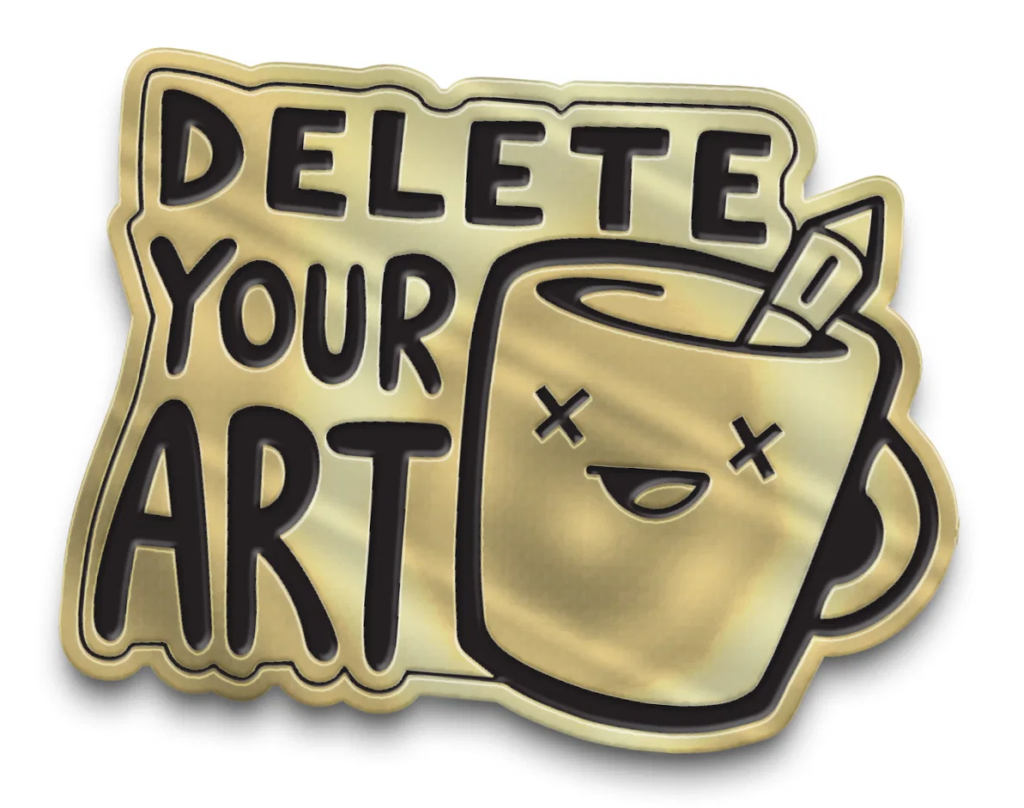
My kid, who is now majoring in game design in college, and I used to watch Drawfee together constantly, especially during lockdown. At some point during the show, the phrase “Delete your Art” became a thing. The context is exactly what it sounds like. Stop being precious about what you made, throw it out, and start again. The idea matters more than the artifact you made, trying to express it.
I stole it immediately. I use it all the time when I mentor UX designers. And lately, I have been trying to figure out what AI does to it.
The Precious Problem
Every designer puts something of themselves into their work. That is not a bug. That is what makes design worth anything. The problem shows up when the attachment to the thing you made starts to get in the way of the problem you were supposed to be solving.
I have watched this play out in more design reviews than I can count. A designer presents a solution with real conviction. Someone gives feedback that identifies a genuine issue, and then the next ten minutes are spent explaining why the feedback is wrong. Not because the feedback is actually wrong, but because the designer has gotten too close to what they made, and criticism of the design feels a lot like criticism of them.
This is what I mean by precious. It is not arrogance exactly. It is tunnel vision. You stared at this thing long enough that you cannot see it clearly anymore, and because you built it, you have a hard time holding it loosely.
The antidote is the ability to delete your art. To remember that the design is not the answer. It is your current best guess at an answer. Those are very different things.
So, What Does AI Do To This?
Here is the question I am still genuinely working through. Does AI make it easier or harder to delete your art?
The optimistic case goes like this. When you design something from scratch, you have made hundreds of small decisions along the way. Every color, every spacing choice, every component, every interaction pattern is yours. The thing feels personal because it is the sum of your decisions over time. When a prompt generates a design, the relationship is different. You authored the direction, not the execution. The output feels a little less like yours, which might make it easier to throw away. If the generated prototype is not working, you write a different prompt. The cost of discarding it feels lower.
That could actually be useful for early-career designers who are still learning that iteration is the job. If AI lowers the psychological cost of trying again, maybe it trains designers to think of their work as hypotheses rather than answers.
The pessimistic case is that AI just moves the problem. Instead of defending a design, designers start defending a prompt. The precious relationship relocates from the artifact to the instruction. The tunnel vision does not go away. It just finds a new home.
There is also something worth sitting with about what you lose when the work feels less personally authored. The reason deletion is hard is the same reason the work is good. Designers who care deeply about what they make, who feel something when it gets torn apart in a review, those designers tend to produce better work than designers who are completely checked out. Attachment is a liability and an asset at the same time. If AI reduces the attachment, it might reduce both.
A Caveat Worth Making
I want to be clear about something before I go further. I am talking specifically about AI in UX and product design contexts, where the work is fundamentally about solving a problem for a user. I do not think AI belongs in creative arts. Writing, illustration, fine art — those disciplines are not problem-solving exercises. They are acts of human expression, and the thing that makes them valuable is precisely that a human made them, and I say this as someone with a stake in it. I am an indie epic fantasy author on top of being a UX leader, and the last thing I want is an AI writing my books. Telling a UX designer to delete their art is not the same thing as telling an artist that their art does not matter. It matters enormously. I just think the tools we use to solve user problems are a different category entirely.
What I Actually Tell People
When I say delete your art to someone I am mentoring, I am not telling them to stop caring. I am telling them to care about the right thing. Care about the user’s problem more than you care about your solution to it. Care about whether it works more than whether it is yours.
That is a mindset shift. AI can speed up the iteration cycle, but it cannot do that work for you. A designer who is precious about their prompts is just as stuck as a designer who is precious about their wireframes. The problem is the attachment to being right, not the medium you are working in.
What AI might genuinely help with is giving early designers more chances to learn. More at-bats. More opportunities to make something, watch it not work, and practice being okay with that. That experience is how designers develop the ability to delete their art in the first place. If AI compresses that learning curve, that is probably one of the more useful things it does for the discipline.
Whether it actually does that depends entirely on how the designer uses it. A tool that generates options can teach iteration, or it can teach over-reliance. The difference is whether the designer is asking why something works or just asking for something that looks better.
That is still a human question. No prompt is going to answer it for you.
Amber Hansford is a Director of UX based in Atlanta. She has spent 15 years leading design organizations, mentoring practitioners, and telling people to delete their art. She also watches a lot of Drawfee. She writes about design leadership, DesignOps, and the structural decisions that determine whether design has actual influence or just the appearance of it.